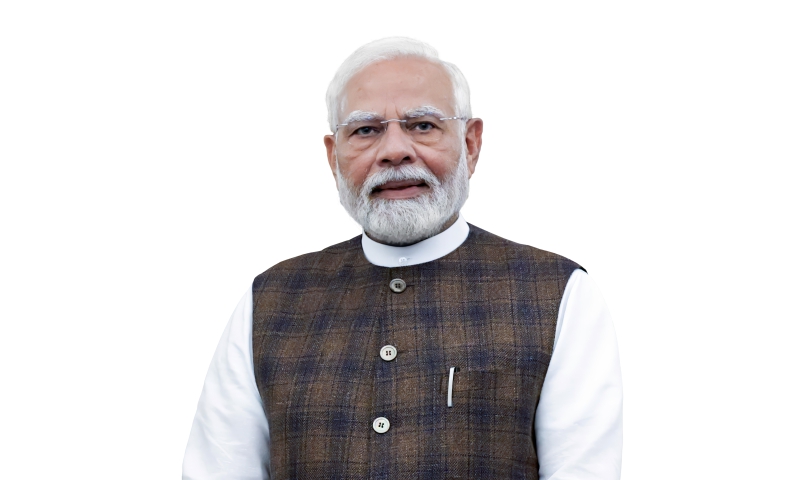
Narendra Damodardas Modi (born 17 September 1950) is an Indian politician who has served as the Prime Minister of India since 2014. He previously served as Chief Minister of Gujarat from 2001 to 2014. Known for his rise from humble beginnings to national leadership, Modi is one of the most prominent and influential figures in modern Indian politics.
Early Life & Background
- Date of Birth: 17 September 1950
- Birthplace: Vadnagar, then Bombay State (now in Gujarat)
- He was born to a modest family; in childhood he helped his father sell tea near a railway station to support the family.
- Despite humble origins, he was known to be hardworking and ambitious from an early age — participating in debates and spending time reading in libraries.
Political Entry & Rise: RSS to BJP
Modi was introduced to the volunteer-organisation Rashtriya Swayamsevak Sangh (RSS) at a young age, and became a full-time worker for the organisation in Gujarat around 1971.
In 1987, he formally joined Bharatiya Janata Party (BJP), and by the late 1990s had risen in party ranks — becoming one of the key leaders shaping the party’s political rise in Gujarat.
Chief Minister of Gujarat (2001–2014)
Modi assumed office as Chief Minister of Gujarat in October 2001 — a turning point in his political career. Over the next decade-plus, under his leadership, Gujarat saw substantial economic growth, infrastructure development, and governance changes that earned him a reputation as a capable administrator.
His tenure, however, was also controversial — in particular for the events of communal violence in 2002, which sparked intense national and international criticism.
Becoming Prime Minister of India (2014–Present)
In 2014, under Modi’s leadership, BJP won a strong mandate nationally. On 26 May 2014, Narendra Modi was sworn in as Prime Minister of India.
He won re-election in 2019, and again in 2024 — becoming one of the longest-serving Prime Ministers outside the traditional ruling party.
Major Initiatives & Policies
- Development & Governance Focus: Emphasis on economic reforms, infrastructure, digitization, and welfare schemes aimed at improving lives of citizens.
- Housing & Welfare: Under his government, large-scale housing and welfare programs have been initiated for underprivileged families.
- Global Leadership & Foreign Policy: Modi’s leadership has elevated India’s global profile, strengthening diplomatic ties and international engagement.
Challenges, Criticism & Controversies
Modi’s political journey, while full of successes, has not been without criticism. The 2002 communal violence in Gujarat remains a major point of contention and criticism in his career.
His tenure also witnesses debates around governance style, balance between development and civil liberties, and how rapid reforms affect different segments of society. Analysts and critics often scrutinize these aspects.
Personal Life & Persona
- Married early in life (arranged marriage), but later led a life dedicated to public service.
- Known for discipline, simplicity, and a narrative of humble beginnings — factors that contribute to his public image and mass appeal.
- Resides in New Delhi at the official residence of the Prime Minister; continues to travel across the country and world engaging in governance and diplomacy.
Impact & Legacy
Narendra Modi’s journey — from a small town boy helping at a tea stall to becoming Prime Minister — symbolizes aspiration, ambition, and transformation. His leadership has reshaped Indian politics, economy, and global presence.
For many, he represents a visionary governance model; for others, a polarizing figure — but his influence on India’s recent political & socio-economic trajectory is undeniable.
FAQ – Frequently Asked Questions
Who is Narendra Modi?
Narendra Modi is the current Prime Minister of India, and former Chief Minister of Gujarat.
When and where was he born?
He was born on 17 September 1950 in Vadnagar, Gujarat (then Bombay State).
When did he become Prime Minister?
He first became Prime Minister on 26 May 2014, after a decisive electoral win by his party.
What major roles did he hold before becoming PM?
He served as Chief Minister of Gujarat from 2001 to 2014, and was a key leader within BJP.
Why is Narendra Modi important for India?
Under his leadership, India has seen major reforms, focus on development, and an enhanced global presence — influencing not just governance but the aspirations of millions across the country.
Conclusion
Narendra Modi remains one of the most influential political figures in India’s history. His life story embodies transformation, ambition, and leadership. Whether celebrated for development and reforms or criticized for controversies, his legacy will continue to shape India’s future for decades to come.