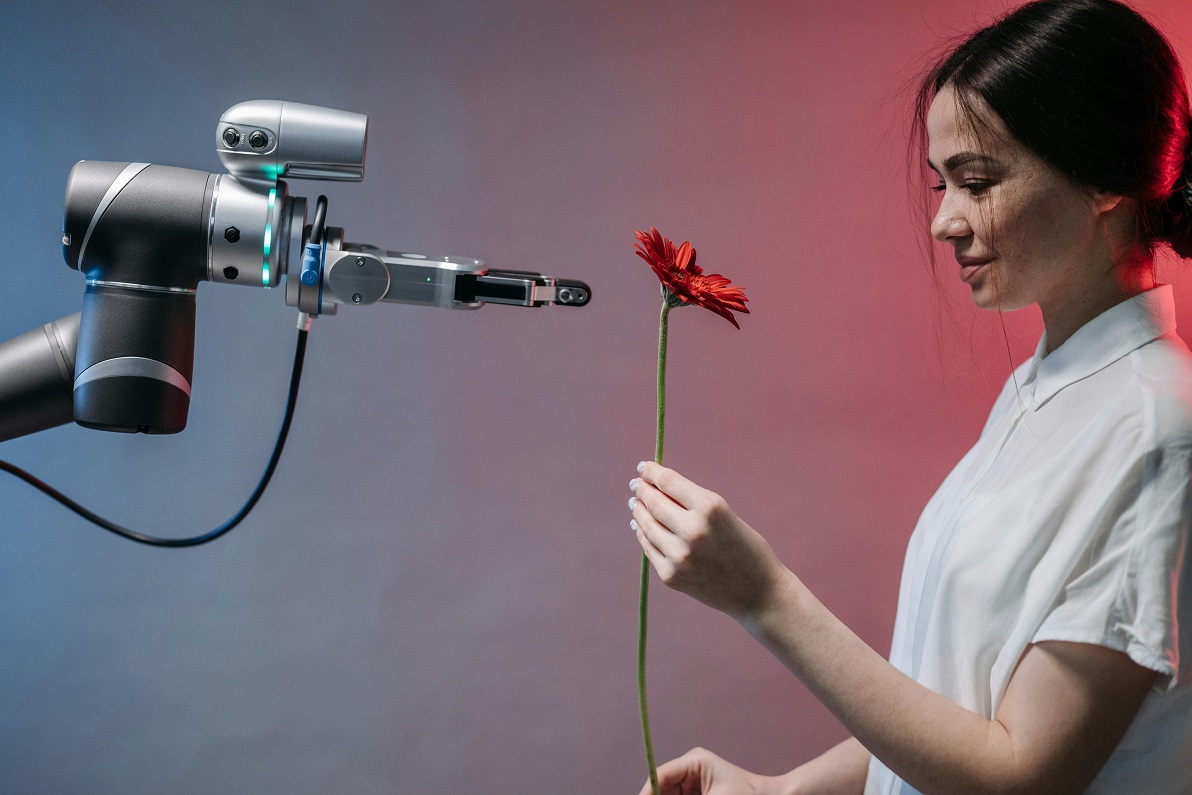
Generative AI creates new content—words, images, code, music—by learning patterns from large datasets. This guide explains the main ideas (models, training, tokens, diffusion, transformers) using plain language and helpful analogies so you can understand what’s happening under the hood.
1. What is Generative AI?
Generative AI describes a class of artificial intelligence systems that can generate new data that looks like the examples they were trained on. Instead of just recognizing or classifying (e.g., “this is a cat”), they produce (e.g., “draw a cat”, “write a poem”, “generate code”).
2. The simple idea: learn patterns, then create
At a high level, generative models do two things:
- Learn patterns from a large set of examples (the training data).
- Generate new examples by sampling from what they've learned.
Imagine learning to write in the style of your favorite author: you read many of their books (training), notice patterns (sentence length, favorite words, rhythm), and then write new text that sounds similar (generation).
3. Core building blocks — models, parameters and tokens
Models and parameters
Generative AI uses neural networks — mathematical functions with many parameters (weights). Training adjusts these parameters so the model's outputs get closer to the real data.
Tokens: the model's vocabulary
For text, models work with tokens—small pieces like words or subwords. A sentence is a sequence of tokens the model learns to predict. For images, tokens can be pixels, patches, or latent codes.
4. Two major families of generative models
Different architectures are used depending on the data and purpose. The two you will hear most about are Transformers and Diffusion models.
Transformers (excellent for text & multimodal)
Transformers (like the GPT family) use an attention mechanism that lets the model weigh the importance of different tokens when predicting the next one. They are trained to predict missing or next tokens and are great at generating coherent, context-aware text.
How a transformer generates text (simplified)
- Input a prompt (some tokens).
- The model computes attention: which earlier tokens matter most?
- It predicts the next token (word or subword) probabilistically.
- Repeat: append the predicted token and predict the next one, until it finishes.
Diffusion models (popular for images)
Diffusion models work differently: they learn to reverse a process that gradually adds noise to data. During training the model sees noisy images and learns how to denoise them step-by-step. At generation time it starts from pure noise and iteratively removes noise until a clean image appears.
5. Training: how models learn
Training means showing the model many examples and using an optimizer (like gradient descent) to reduce a loss function (a measure of how wrong the model's outputs are). For text, the loss measures how well the model predicts the next token. For images, it may measure how close the denoised output is to the original image.
Training needs:
- Large datasets (text corpora, image collections)
- Powerful hardware (GPUs/TPUs)
- Lots of time and careful tuning
6. Sampling: turning probabilities into actual output
Generative models produce probabilities for possible next tokens or pixel values. To create a concrete output the system samples from that probability distribution. Different sampling strategies change behavior:
- Greedy: always pick the highest-probability token (can be repetitive).
- Top-k or top-p (nucleus) sampling: sample from the top choices, adding variety while keeping coherence.
- Temperature: a parameter controlling randomness; higher temperature → more creative, but riskier outputs.
7. Conditioning, prompts and control
To direct what the model generates, we provide a prompt or conditioning signal. For text this is a prompt sentence. For images it can be a text prompt, a sketch, or example images (few-shot). Advanced systems allow fine control via additional inputs like style tokens, templates, or explicit rules.
8. Multimodal models and fine-tuning
Modern generative systems can handle multiple modalities (text + images + audio). A base model is often fine-tuned for specific tasks or domains by training further on specialized data (medical text, legal documents, a specific artist's style) so outputs match the domain’s needs.
9. Safety, bias and limitations
Generative AI has big benefits but also important limitations and risks:
- Bias: models learn biases present in their training data.
- Hallucinations: sometimes models invent facts or produce incorrect information.
- Copyright & provenance: generated content may mimic copyrighted material; tracing origins is difficult.
- Privacy: models trained on private data can inadvertently reveal sensitive information.
Mitigation includes better dataset curation, fine-tuning, retrieval-augmented generation (RAG — combining model outputs with trusted sources), and human review in critical tasks.
10. Applications — where generative AI is used today
- Text: chatbots, content drafting, summarization, code generation
- Images: art and design, product mockups, medical image synthesis
- Audio & Music: voice cloning, music composition
- Video: editing, synthesis, and deepfakes (raises ethical concerns)
- Multimodal assistants: systems that read documents, answer questions, and generate reports.
11. A concise end-to-end example (text)
Imagine you ask a chatbot: “Write a friendly email asking for a meeting next Tuesday.”
- Prompt tokens (your question) are converted into token IDs.
- The transformer processes tokens, using attention to understand context.
- It predicts a probability distribution for the next token.
- A token is sampled and appended; the model repeats until the email is complete.
- The final tokens are converted back to readable text and returned to you.
12. How the field is evolving (brief)
Key trends you’ll see continuing:
- Smaller, efficient models for edge devices
- Better multimodal understanding (image + text + audio together)
- More reliable factual grounding via retrieval-augmentation
- Tools to detect generated content and improve provenance
- Stronger safety guardrails and regulatory attention
13. Quick glossary
- Token: basic unit (word/subword) processed by text models.
- Parameter: a learned number inside the model (weights).
- Transformer: neural architecture based on attention.
- Diffusion model: generates images by iterative denoising.
- Fine-tuning: training a model further on specific data.
- RAG: Retrieval-Augmented Generation — combining model outputs with external knowledge sources.
Frequently Asked Questions (FAQ)
Is generative AI the same as regular AI?
No. Generative AI specifically focuses on creating new content. Other AI systems might classify or predict without generating new data.
Why do models sometimes give wrong answers?
Models predict based on patterns, not true understanding. If data is noisy, limited or ambiguous, the model may produce plausible-sounding but incorrect answers (hallucinations).
Can generative AI be trusted for important decisions?
Not alone. Use generative AI as an assistant with human oversight, especially in high-stakes areas like medicine, law, or finance.
How can I start learning about generative AI?
Begin with basics: Python, probability, linear algebra, and then explore machine learning courses (Coursera, fast.ai). Try hands-on experiments using small transformer and diffusion model examples in open-source libraries.